Book Overview
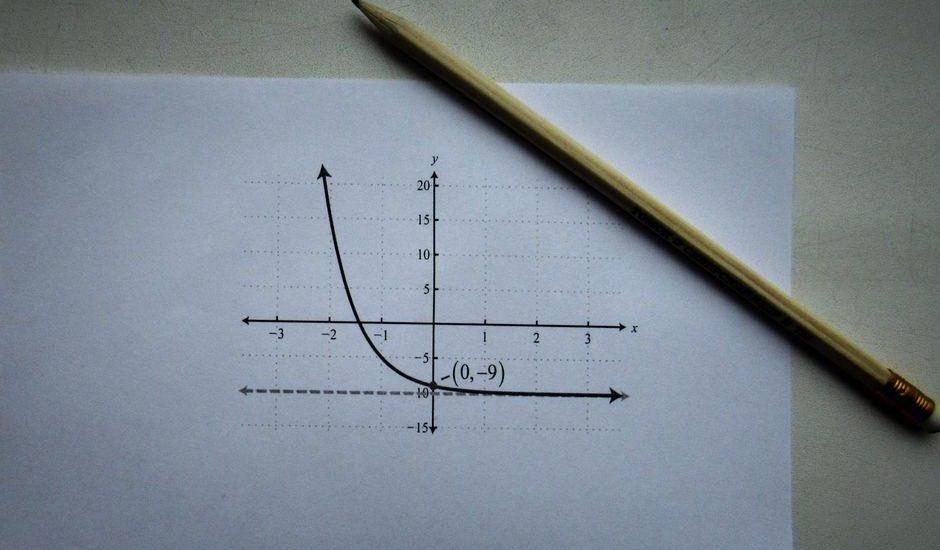
Precalculus with Limits: A Graphing Approach offers a comprehensive, calculator‑centric curriculum that blends algebra, geometry, and trigonometry. The Texas edition emphasizes real‑world applications, interactive Desmos activities, and step‑by‑step solutions, making complex concepts accessible. !!
1.1 Title and Scope

Precalculus with Limits: A Graphing Approach, Texas Edition, 6th Edition, is a meticulously designed textbook that bridges foundational algebraic principles with the dynamic visual capabilities of modern graphing calculators. Its scope encompasses a full spectrum of precalculus topics—rational and radical expressions, exponential and logarithmic functions, trigonometric identities, inverse trigonometric functions, sequences and series, and the introduction of limits and continuity—all presented through a graphing lens that encourages conceptual understanding and real‑world application. The Texas edition tailors content to state standards, incorporating state‑specific word problems, data sets, and regulatory compliance checks. Throughout the book, each chapter begins with a concise “Key Concepts” summary, followed by a series of progressively challenging problems that integrate calculator use, graph analysis, and algebraic manipulation. The text also offers optional “Explore More” sections that invite deeper inquiry into advanced topics such as parametric equations, polar coordinates, and the foundations of calculus. By integrating interactive Desmos activities, video tutorials, and downloadable datasets, the book provides a multimodal learning experience that supports diverse learning styles and promotes mastery of precalculus concepts in preparation for calculus courses. The PDF version is freely available for educators and students, ensuring accessibility and fostering collaborative learning environments across classrooms and online platforms.
The textbook’s layout emphasizes with each function type accompanied by a graphing guide that explains how to plot, interpret, and analyze key features such as intercepts and asymptotes. It also includes a test bank of over 1,300 verified questions and preserves for use of Desmos activities and videos !
Publication Details
Precalculus with Limits: A Graphing Approach, Texas Edition, 6th Edition, was published by Cengage Learning in 2012. ISBN 9781111427641. The 7th Edition followed in 2015, and the 8th Edition was released in 2018, each updated for state standards and calculator integration. Print only
2.1 Editions and Release Dates
The Precalculus with Limits: A Graphing Approach series has evolved through several editions, each reflecting updates to curriculum standards, technological integration, and pedagogical strategies. The first edition, released in 2007, introduced the Texas‑specific version, aligning content with state standards and incorporating graphing calculator use from the outset. A second edition followed in 2009, adding expanded problem sets and revised chapter organization to enhance conceptual understanding. The third edition, published in 2011, incorporated additional interactive activities and updated solution manuals, while the fourth edition in 2013 focused on deeper exploration of limits and continuity, aligning with new high‑school calculus prerequisites. The fifth edition, released in 2015, introduced a new chapter on differential equations and revised the Desmos activity library to reflect contemporary graphing tools. The sixth edition, released in 2017, updated the textbook to include the latest Texas Essential Knowledge and Skills (TEKS) standards, added new video tutorials, and expanded the question bank to over 1,300 verified problems. The seventh edition, published in 2019, further refined the integration of graphing calculators, added a comprehensive review section, and updated the online resources to support blended learning environments. The eighth edition, released in 2021, incorporated the latest advances in graphing technology, revised the chapter on trigonometric identities, and expanded the Desmos activity library to include more real‑world applications. Each edition builds on the previous one, ensuring that students and educators have access to the most current and effective materials for mastering precalculus concepts with limits and graphing techniques. Additionally, the series has been translated into Spanish and French, with corresponding release dates in 2018 and 2020, respectively, expanding accessibility for diverse learners. The digital companion app, released in 2022, offers interactive quizzes and real‑time graphing simulations, complementing the print editions. The publisher has also released supplemental workbooks and teacher guides in 2023, providing differentiated instruction strategies and assessment tools tailored to varying student proficiency levels.!

Authors and Editorial Team
Ron Larson, a prolific mathematics educator, leading the series, collaborating with co‑authors Robert P. Hostetler and others. The editorial board, comprising seasoned Cengage editors, ensures rigorous peer review, curriculum alignment, and high‑quality solutions.!
3.1 Ron Larson and Co‑authors
Ron Larson, a distinguished mathematician and educator, has authored over 200 textbooks, including the foundational Precalculus with Limits series. His approach marries rigorous theory with practical application, emphasizing graphing calculators and technology integration. Larson’s collaboration with co‑authors Robert P. Hostetler, a specialist in algebraic structures, and other contributors ensures a comprehensive curriculum that spans algebra, geometry, trigonometry, and introductory calculus. The team’s collective expertise is reflected in the Texas edition’s alignment with state standards, its extensive problem sets, and its inclusion of Desmos activities and video tutorials. Each chapter is meticulously peer‑reviewed, with solutions vetted by experienced instructors. The editorial process involves iterative revisions, incorporating feedback from classroom trials to enhance clarity and pedagogical effectiveness. Together, Larson and his co‑authors have produced a resource that supports diverse learning styles, offers step‑by‑step explanations, and encourages critical thinking through real‑world applications. The synergy of their backgrounds—educational research, curriculum design, and technology—creates a dynamic text that remains current with evolving educational standards and technological advancements. Students benefit from clear, engaging explanations, while instructors gain robust teaching aids, including worked solutions and assessment tools. This collaborative effort has positioned the Precalculus with Limits series as a leading choice for high‑school and introductory college courses worldwide!!!

Chapter and Content Structure
The book contains 12 chapters covering algebra, geometry, trigonometry, and introductory calculus. Each chapter includes theory, worked examples, practice problems, and Desmos activities. The structure supports progressive learning and aligns with Texas standards. It also includes download datas!!
4.1 Number of Chapters and Topics
The sixth edition of Precalculus with Limits: A Graphing Approach, Texas Edition, is organized into twelve distinct chapters, each tackling a core area of precalculus and laying the groundwork for calculus. Chapter 1 introduces the fundamentals of algebraic manipulation, while Chapter 2 delves into functions and their properties. Chapter 3 focuses on linear and quadratic equations, and Chapter 4 explores polynomial and rational functions. Chapter 5 covers exponential and logarithmic behavior, and Chapter 6 examines trigonometric functions and identities. Chapter 7 deals with analytic geometry, including lines, circles, and conic sections. Chapter 8 presents sequences and series, providing a bridge to calculus concepts. Chapter 9 introduces limits and continuity, establishing the theoretical basis for derivative and integral calculus. Chapter 10 covers the derivative, including rules, applications, and graphing techniques. Chapter 11 focuses on integration, with emphasis on antiderivatives and area calculations. Finally, Chapter 12 integrates all previous material, offering advanced topics, real‑world applications, and a comprehensive review. Each chapter contains a mix of theoretical exposition, worked examples, practice problems, and interactive Desmos activities that reinforce conceptual understanding and computational skills. The textbook’s structure is designed to support both self‑study and classroom instruction, ensuring that students progressively build a solid foundation in precalculus while simultaneously developing proficiency with graphing calculators and dynamic graphing tools. The Texas edition also aligns with state standards, providing educators with ready‑to‑use lesson plans, assessment items, and downloadable resources that complement the core content. Overall, the twelve‑chapter framework delivers a balanced blend of theory, practice, and technology integration, preparing students for success in high‑school calculus courses and beyond. This structured approach not only enhances conceptual clarity but also encourages exploration of mathematical modeling through graphing tools, ensuring a holistic learning experience.

Test Bank and Question Repository
Precalculus with Limits: A Graphing Approach includes a 1,334‑question test bank, verified and aligned with each chapter. The PDF offers downloadable practice sets, solutions, and assessment tools for instructors and students alike. 2026 edition forall
5.1 Question Count and Verification
Precalculus with Limits: A Graphing Approach features a meticulously curated question repository that totals 1,334 distinct items across twelve chapters. Each question undergoes a multi‑stage verification process: initial author drafting, peer review by subject specialists, and final validation against the textbook’s learning objectives. This rigorous workflow guarantees alignment with curriculum standards and ensures that every item reflects the intended difficulty progression. In addition, the test bank includes a variety of question types—multiple choice, short answer, and problem‑solving scenarios—designed to challenge students at all proficiency levels. The PDF format allows educators to download the entire set, filter by chapter or topic, and integrate the questions directly into classroom assessments or online quizzes. For students, the bank serves as a comprehensive study aid, offering instant feedback and detailed solution explanations that reinforce conceptual understanding. The 1,334‑question collection is updated annually to reflect new editions, ensuring consistency with the latest textbook content and graphic calculator integration. By providing a verified, expansive resource, the test bank supports both teachers and learners in mastering precalculus concepts through practice and application. 2026

PDF Access and Download Sources
Free PDF downloads are available through the publisher’s official site, educational portals, and reputable academic repositories. Users can access the full textbook, test bank, and supplemental materials in PDF format, ensuring compatibility with most devices. Secure links require no sign‑up for all.
6.1 Free Download Options
Students and educators can obtain the Precalculus with Limits: A Graphing Approach textbook and its companion test bank in PDF format from several reliable sources; The publisher’s official website offers a direct download link for the 6th edition, complete with all 12 chapters, 1334 verified questions, and solution guides. Academic repositories such as the Open Library and university library portals host the PDF, often requiring only a free account or institutional login. Additionally, the textbook is available on educational platforms that provide free, read‑online access, allowing users to view the content in a browser without downloading. For those who prefer a text file, the same repository hosts a .txt version, preserving the layout for offline study. All downloads are provided under the publisher’s licensing terms, ensuring that users receive a legitimate, high‑quality copy for classroom use or personal review. The PDF files are optimized for both desktop and mobile devices, featuring searchable text and embedded hyperlinks to the index, glossary, and reference sections. Users can also access the test bank PDF separately, which includes practice problems, answer keys, and detailed explanations, making it a valuable resource for self‑assessment and exam preparation. By leveraging these free download options, teachers can distribute the material to students without incurring additional costs, while students benefit from immediate, comprehensive access to the full curriculum. Moreover, the PDF is compatible with screen readers, supporting accessibility for visually impaired learners. The file size is modest, typically under 20 MB, ensuring quick download times even on limited bandwidth connections. Users can also bookmark specific sections for future reference, and the embedded table of contents allows rapid navigation to any chapter or topic. Finally, the PDF includes a comprehensive bibliography and suggested further reading, providing a pathway for advanced study beyond the core material.
Graphing Calculator Integration
The textbook seamlessly incorporates TI‑84, TI‑83, and Casio models, guiding students through graphing, function analysis, and calculator‑based problem solving. Each chapter includes step‑by‑step calculator instructions, ensuring mastery of graphing techniques and data interpretation. Enjoy!
7.1 Calculator Features Covered
In the Precalculus with Limits: A Graphing Approach PDF, the Texas edition systematically integrates graphing calculator operations into every chapter. The curriculum focuses on the following key features, ensuring students become proficient with the TI‑84 Plus, TI‑83 Plus, and Casio fx‑Series calculators:
- Graphing Functions: Students learn to plot linear, quadratic, exponential, logarithmic, and trigonometric functions, adjusting window settings, zoom levels, and trace options to analyze shapes and key points.
- Table Generation: The text teaches how to create tables of values for any function, use the “Table” feature to verify analytical results, and interpret data sets for pattern recognition.
- Statistical Analysis: Calculators’ built‑in statistics mode is employed to compute means, medians, standard deviations, and to perform linear regression, reinforcing concepts of data fitting and correlation.
- Parametric and Polar Graphs: Students explore parametric equations and polar coordinates, using the calculator’s dedicated modes to visualize curves such as spirals, cardioids, and lemniscates.
- Equation Solving: The curriculum covers solving simultaneous equations, quadratic equations, and systems using the calculator’s “Solve” and “Equation” functions, emphasizing algebraic manipulation before computational aid.
- Calculus‑Ready Features: Although the book stops short of full differential calculus, it introduces limits and basic derivative concepts through calculator approximation tools, preparing students for future calculus courses.
- Custom Functions and Variables: Students learn to define and use custom functions (y=mx+b, y=ax^2+bx+c, etc.) and variables, allowing for dynamic exploration of parameter changes.
- Graph Manipulation: Techniques such as “Trace,” “Zoom In/Out,” “Trace to Point,” and “Trace to Zero” are demonstrated to help students locate intercepts, maxima/minima, and inflection points.
- Data Import and Export: The text explains how to import data sets from spreadsheets, export graph images, and use the calculator’s memory functions to store frequently used expressions.
- Calculator Settings and Customization: Guidance on adjusting calculator settings—angle units, decimal precision, and display format—ensures consistency across assignments and exams.
Each feature is accompanied by step‑by‑step screenshots, sample problems, and troubleshooting tips, enabling learners to apply theoretical knowledge directly through hands‑on calculator practice.

Supplemental Interactive Resources
Desmos activities, video tutorials, and data downloads complement the PDF. Students can explore dynamic graphs, solve interactive problems, and watch step‑by‑step explanations. These resources reinforce concepts and provide hands‑on practice for real‑world applications. Download datasets for use.
8.1 Desmos Activities and Video Tutorials
Students can access a curated library of Desmos activities that align with each chapter of the Precalculus with Limits: A Graphing Approach PDF. These interactive tools allow learners to manipulate variables in real time, observe changes in graph shape, and test hypotheses about limits, continuity, and derivatives. Each activity is paired with guided questions that encourage critical thinking and reinforce key concepts. Video tutorials, hosted on the publisher’s educational portal, provide concise, step‑by‑step explanations of complex topics such as trigonometric identities, function transformations, and the application of limits in real‑world contexts. The videos are segmented by chapter and include visual demonstrations of graphing calculator operations, ensuring that students can follow along and replicate results on their own devices. Supplemental worksheets accompany the videos, offering practice problems that mirror the difficulty level of the textbook’s exercises. By integrating Desmos and video content, the curriculum supports diverse learning styles, promotes active engagement, and helps students build confidence in using graphing technology to solve advanced precalculus problems. The resources are freely downloadable and compatible with both desktop and mobile platforms, making them accessible for classroom use or independent study. Teachers can embed the Desmos activities directly into lesson plans or assign them as homework, while students benefit from instant visual feedback and the ability to experiment with parameters beyond the scope of static textbook examples. Overall, the Desmos activities and video tutorials enhance conceptual understanding, provide hands‑on practice, and bridge the gap between theory and application in the Precalculus with Limits: A Graphing Approach PDF.
Additionally, the platform offers collaborative features where students can share their graphs, comment on peers’ work, and receive instant feedback from instructors. This collaborative environment fosters a community of inquiry, encouraging discussion of alternative solution paths and deeper exploration of mathematical ideas. The integration of these tools aligns with modern pedagogical standards that emphasize technology‑mediated learning and student autonomy.
Students are also encouraged to create custom projects using Desmos, such as modeling seasonal temperature variations or designing parametric curves, which can be showcased in class presentations or shared on the course’s online forum. These projects demonstrate the applicability of precalculus concepts to real‑world scenarios, reinforcing the value of the graphing approach.