

Ashley Ann Tahigan’s guide offers a pathway to visual storytelling mastery, benefiting directors and enthusiasts alike. Her techniques transform ideas into compelling narratives,
emphasizing precision and clarity for impactful visual communication.
The Core Philosophy of Visual Storytelling
Ashley Ann Tahigan’s core philosophy centers on storyboarding as more than just pre-production; it’s the foundational blueprint for emotional resonance. Her approach prioritizes clarity and impactful visual communication, believing a strong storyboard proactively solves problems before expensive production stages.
Tahigan emphasizes that each panel isn’t merely a sketch, but a carefully considered composition designed to evoke specific feelings and guide the audience’s eye. This involves mastering framing, composition, and understanding how these elements contribute to the narrative’s overall pacing and emotional impact.
Ultimately, her guide champions storyboarding as a tool for collaborative vision, ensuring everyone involved shares a unified understanding of the story’s intent and execution, leading to a more cohesive and compelling final product.
Ashley Ann Tahigan’s Background and Influence
Ashley Ann Tahigan is recognized as an accomplished storyboard artist, though specific details regarding her formal training remain less publicly available. However, her work demonstrates a mastery of visual storytelling principles, influencing both emerging and seasoned professionals.
Her guide draws upon practical experience, offering insights that go beyond theoretical instruction. It’s clear her approach is rooted in a deep understanding of filmmaking and animation pipelines, emphasizing the storyboard’s crucial role in pre-visualization.
Tahigan’s influence stems from her ability to distill complex narratives into concise, visually compelling panels, making her guide a valuable resource for creatives seeking to elevate their storytelling capabilities.

Fundamentals of Storyboarding
Storyboarding is a crucial first step in visual narrative creation, transforming ideas into a pre-visualized sequence of panels, as highlighted in Tahigan’s guide.
What is a Storyboard and Why is it Important?
A storyboard is essentially a sequence of drawings, representing shots or panels, used to visualize a narrative before production begins. Ashley Ann Tahigan’s guide emphasizes its role as a foundational tool for filmmakers and creatives. It’s more than just sketches; it’s a blueprint for visual storytelling.
Its importance lies in several key areas. Storyboards help to refine pacing, timing, and composition, ensuring a clear and engaging visual flow. They facilitate communication between the director, artists, and the entire production team, preventing costly misunderstandings during filming or animation.

Furthermore, a storyboard allows for experimentation with different angles, shots, and sequences without the expense of actual production. Tahigan’s approach highlights how effective storyboarding can elevate creative endeavors, transforming abstract ideas into tangible visual narratives.
Key Elements of a Storyboard Panel
Ashley Ann Tahigan’s guide details that each storyboard panel isn’t merely a drawing, but a concise visual statement. Core elements include a clear depiction of the shot’s composition – framing, camera angle, and subject placement. Annotations are crucial, specifying camera movement (pan, tilt, zoom), character actions, and dialogue snippets.
Panel numbers ensure sequential order, while brief descriptions clarify the scene’s context and emotional tone. Arrows indicate action lines and character movement, guiding the viewer’s eye.

Tahigan stresses the importance of visual clarity; even rough sketches should effectively communicate the intended shot. These elements, when combined, create a powerful tool for pre-visualization, allowing for informed decisions before committing to production.
Basic Storyboarding Techniques: Framing and Composition
Ashley Ann Tahigan’s approach emphasizes that mastering framing and composition is fundamental to effective storyboarding. Utilize a variety of shot types – wide shots establish location, medium shots focus on characters, and close-ups convey emotion. Consider the rule of thirds to create visually balanced and engaging compositions.
Leading lines draw the viewer’s eye, while negative space can emphasize isolation or create tension. Tahigan advocates for experimenting with camera angles – high angles can diminish characters, low angles can empower them.
Consistent framing throughout a sequence maintains visual continuity, while deliberate changes signal shifts in mood or perspective.

Advanced Storyboarding Techniques Inspired by Tahigan
Tahigan’s advanced techniques focus on visual communication, pacing, and character action. Her methods inspire professionals to refine their storytelling through dynamic panel layouts.
Visual Communication and Clarity in Panels
Ashley Ann Tahigan’s approach prioritizes exceptionally clear visual communication within each storyboard panel. This isn’t merely about drawing skill, but about conveying information concisely and effectively to the entire production team. Her guide emphasizes using strong silhouettes, dynamic angles, and purposeful compositions to immediately establish the scene, character emotions, and intended action.
Effective panels, inspired by Tahigan, avoid unnecessary detail that could distract from the core narrative. Instead, they focus on key elements, utilizing visual cues to guide the viewer’s eye. Thoughtful use of arrows, speed lines, and simple annotations further enhances clarity, ensuring everyone understands the director’s vision. Ultimately, Tahigan’s techniques aim to transform storyboards into a universally understood visual language.
Using Storyboards for Pacing and Timing

Ashley Ann Tahigan’s storyboard guide highlights the crucial role storyboards play in establishing pacing and timing within a visual narrative. Beyond simply depicting scenes, her techniques emphasize visualizing the duration of each shot and the transitions between them. This allows filmmakers to proactively address potential pacing issues before expensive production begins.
Tahigan advocates for using panel size and composition to subtly indicate timing – larger, more detailed panels suggesting longer shots, while smaller, simpler panels imply quicker cuts. Annotations regarding action speed and emotional beats further refine the timing; By meticulously planning these elements during the storyboarding phase, directors can ensure a compelling and rhythmically engaging final product.
Character Blocking and Action Lines
Ashley Ann Tahigan’s approach to storyboarding places significant emphasis on clear character blocking and dynamic action lines. Her guide stresses that storyboards aren’t just about what happens, but how it happens spatially and kinetically. Utilizing simple lines and arrows, Tahigan demonstrates how to effectively communicate character movement, positioning, and interactions within each panel.
This technique allows the entire team to visualize the scene’s choreography, preventing confusion during filming. She advocates for exaggerating key movements in the storyboard to ensure clarity, even if the final performance is more subtle. Effective blocking, as Tahigan illustrates, enhances storytelling and guides the viewer’s eye.

Tools and Materials for Storyboarding
Tahigan’s guide covers both traditional supplies – paper and pencils – and digital software options for storyboarding, advocating for integrating both methods for optimal workflow.
Traditional Storyboarding Supplies (Paper, Pencils, etc.)
Ashley Ann Tahigan’s approach doesn’t dismiss the power of classic tools. A foundational element involves utilizing simple, readily available materials. High-quality sketchbooks or loose sheets of paper are essential, providing a flexible canvas for initial ideas and rapid iterations.
Various pencils – from soft leads for expressive sketching to harder leads for detailed linework – allow for a range of visual styles. Erasers, both kneaded and standard, are crucial for refining panels without damaging the paper.
Furthermore, consider incorporating markers or colored pencils to add visual cues and emphasize key elements within the storyboard. The tactile experience of traditional methods fosters a direct connection to the creative process, allowing for spontaneous exploration and a more intuitive workflow, as highlighted in her guide.
Digital Storyboarding Software Options
Ashley Ann Tahigan’s guide acknowledges the increasing prevalence of digital tools in modern storyboarding. Several software options cater to diverse needs and skill levels. Storyboard Pro is a popular choice, offering robust features for panel management, drawing, and animation previews.
Toon Boom Storyboard Pro provides a comprehensive suite for professional workflows. Alternatively, Clip Studio Paint is favored for its natural drawing feel and versatility. For simpler projects, Adobe Photoshop or Procreate (on iPad) can be effective, though requiring more manual setup.
These digital platforms facilitate easy revisions, collaboration, and integration with other production pipelines, streamlining the storytelling process and enhancing visual clarity.
Integrating Digital and Traditional Methods
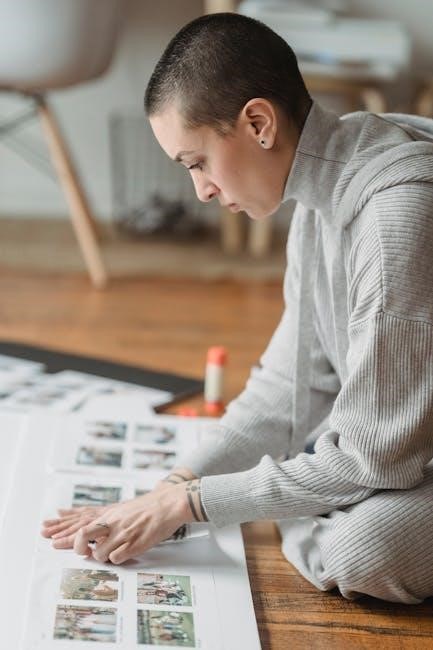
Ashley Ann Tahigan’s approach doesn’t necessarily advocate for exclusively digital or traditional storyboarding. A hybrid workflow often yields the best results, combining the strengths of both. Many artists begin with rough sketches on paper – fostering quick ideation and a tactile connection to the visuals.
These sketches can then be scanned and imported into digital software for refinement, cleanup, and sequencing. This allows for the flexibility of digital editing while retaining the spontaneity of hand-drawn art.
The key is to leverage each method where it excels, creating a seamless transition between physical and virtual stages of the storyboarding process.
Collaboration and Feedback in the Storyboarding Process
Tahigan’s guide stresses teamwork; sharing storyboards with directors and colleagues is vital. Constructive criticism refines the vision, leading to iterative improvements and a stronger narrative.
Working with Directors and Other Team Members
Ashley Ann Tahigan’s approach highlights the crucial nature of collaboration throughout the storyboarding process. Effective communication with the director is paramount, ensuring the storyboard accurately reflects their vision and intended emotional impact.
Presenting storyboards isn’t simply a display of artwork; it’s initiating a dialogue. Be prepared to explain your framing choices, character blocking, and pacing decisions. Actively solicit feedback from all team members – cinematographers, production designers, and animators – as their insights can significantly enhance the storyboard’s effectiveness.
Remember, a storyboard is a blueprint for a shared creative endeavor. Openness to suggestions and a willingness to incorporate diverse perspectives will ultimately result in a more polished and compelling final product. Tahigan’s guide emphasizes that storyboarding is rarely a solitary pursuit.
Giving and Receiving Constructive Criticism
Ashley Ann Tahigan’s storyboard guide underscores the importance of both offering and accepting feedback with professionalism. When critiquing, focus on the storyboard’s clarity and effectiveness in conveying the story, not personal artistic preferences. Frame suggestions positively, highlighting potential improvements rather than simply pointing out flaws.
Receiving criticism requires an open mind and a willingness to learn. Don’t take feedback personally; view it as an opportunity to refine your work and strengthen the visual narrative. Ask clarifying questions to fully understand the concerns raised.
Remember, the goal is a collaborative improvement of the project. A constructive dialogue, guided by Tahigan’s principles, fosters a stronger, more impactful storyboard.
Iterative Storyboarding: Refining Your Vision
Ashley Ann Tahigan’s approach champions iterative storyboarding – a process of continuous refinement. The initial storyboard isn’t a final product, but a foundation for exploration. Embrace revisions based on feedback, directorial input, and your own evolving understanding of the narrative.
This involves revisiting panels, adjusting compositions, and experimenting with different visual solutions. Don’t hesitate to redraw sections entirely if necessary. Each iteration brings the story closer to its full potential.
Tahigan’s guide emphasizes that this cyclical process, fueled by constructive criticism, is key to crafting a truly captivating and effective visual narrative.
Common Pitfalls to Avoid in Storyboarding
Avoid overcomplicating panels and neglecting clarity; pacing is crucial. Tahigan’s guide stresses that ignoring timing and visual communication weakens the storyboard’s impact.
Overcomplicating Panels
A frequent mistake, highlighted in Ashley Ann Tahigan’s storyboard guide, is attempting to convey too much information within a single panel. Resist the urge to pack every detail into each frame; simplicity often yields greater clarity. Overcrowded panels become visually noisy, obscuring the core action and confusing the viewer.
Tahigan emphasizes focusing on the essential elements of each beat – the key poses, expressions, and actions that drive the narrative forward. Prioritize what needs to be seen to understand the story, and leave out extraneous details. Remember, a storyboard is a blueprint, not a finished painting. It’s about communicating ideas efficiently, and a cluttered panel defeats that purpose. Embrace concise visual storytelling for maximum impact.

Lack of Clarity and Visual Communication
Ashley Ann Tahigan’s guide stresses that a storyboard’s primary function is clear visual communication. Ambiguous panels defeat the purpose, leading to misinterpretations by the team. Ensure each drawing clearly conveys the intended action, emotion, and camera angle. Sloppy or rushed sketches can hinder understanding, creating confusion during production.
Effective storyboarding relies on strong visual literacy. Use clear lines, distinct silhouettes, and expressive character poses. Consider how elements within the frame guide the viewer’s eye. Tahigan advocates for thinking like a camera – framing shots intentionally to emphasize key moments. Prioritize readability and ensure everyone understands the story being told, visually.
Ignoring Pacing and Timing Considerations
Ashley Ann Tahigan’s storyboard guide highlights the critical role of pacing. A storyboard isn’t just about what happens, but when and how quickly. Ignoring timing can result in a disjointed or draggy final product. Vary shot lengths to build tension, emphasize emotional beats, or create a sense of urgency.
Consider the rhythm of the scene. Use the storyboard to experiment with different shot sequences and transitions. Tahigan emphasizes visualizing the flow of time – how long each action takes, and how it impacts the overall narrative. A well-paced storyboard anticipates the audience’s engagement, ensuring a captivating viewing experience.