

Hunter Ceiling Fan Assembly Instructions ― Comprehensive Plan
This detailed guide provides step-by-step instructions for assembling your Hunter ceiling fan, covering everything from parts verification to final testing and troubleshooting.
Referencing page numbers (e.g., 8, 9, 10, 11, 12) from the manual, this plan ensures a safe and efficient installation process for standard or angled mounting.
Welcome to the process of installing your new Hunter ceiling fan! This guide is designed to empower both seasoned DIY enthusiasts and first-time installers. Proper installation guarantees optimal performance, safety, and years of reliable operation.
Before you begin, familiarize yourself with the comprehensive plan, referencing key pages like 8, 9, and 10. Understanding the mounting options – Profile, Standard, or Angled – is crucial. Remember, a secure mounting is paramount to prevent the fan from falling, adhering to weight limit considerations.
Safety Precautions
Prioritize safety throughout the Hunter ceiling fan installation process. Always disconnect the electrical supply before commencing any work to avoid electric shock. Ensure the ceiling joist can support the fan’s weight – a critical step to prevent the fan from falling.
Do not use lubricant on screws as this can compromise the secure mounting. Adhere to minimum ceiling height requirements (84” to floor) and follow all provided warnings for a safe and successful installation.
Electrical Safety
Before beginning, completely disconnect the electrical power supply at the breaker box. Verify the power is off using a non-contact voltage tester. Wiring must be done correctly, following color-coded connections to ensure proper functionality and prevent short circuits.
Ensure all wire connections are secure and that no bare wires are exposed. If unfamiliar with electrical work, consult a qualified electrician for assistance – safety is paramount.
Weight Considerations & Support
Hunter ceiling fans can be substantial in weight, requiring appropriate ceiling support. Ensure the ceiling joist can support the fan’s weight, typically requiring a minimum of 84 inches from the floor.
Proper mounting is crucial to prevent the fan from falling. Verify the mounting bracket is securely fastened to a structural ceiling joist, capable of handling the specified weight limit.
Parts List Verification
Before beginning assembly, carefully unpack all components and verify against the parts list included with your Hunter ceiling fan. This crucial step prevents delays and ensures a smooth installation process.
Confirm the presence of all items, including blades, blade irons, the motor assembly, mounting bracket, switch housing, and any included hardware like screws and wiring connectors.
Identifying All Components
Familiarize yourself with each part of your Hunter ceiling fan before starting the assembly. The motor assembly forms the core, while the mounting bracket secures it to the ceiling.
Distinguish between blade irons and blades, recognizing the switch housing and canopy as essential finishing elements. Note the receiver if your model includes remote control functionality, and locate the trim ring.
Checking for Missing Parts
Before commencing assembly, meticulously compare all received components against the parts list provided in your Hunter fan’s documentation. Ensure you have the mounting bracket, motor, blades, blade irons, and switch housing.
Verify the presence of all screws, wire connectors, and the canopy. If a remote is included, confirm its receiver is present. Missing parts will halt installation; contact Hunter support immediately for replacements.
Mounting Bracket Installation
Securely attaching the mounting bracket is crucial for fan stability. First, select the appropriate mounting option – standard or angled – based on your ceiling configuration. Ensure the bracket is firmly screwed into a ceiling joist, not just drywall.
Refer to Figures 6 and 7 in the manual for visual guidance. Confirm the bracket can support the fan’s weight before proceeding; preventing a fall is paramount.
Selecting the Correct Mounting Option (Standard/Angled)
Determining the correct mounting option – standard or angled – is vital for proper fan operation and safety. Assess your ceiling’s slope; a standard mount suits flat ceilings, while angled ceilings require a specialized bracket.
The manual details steps for both profiles. Incorrect mounting can lead to wobbling or, critically, prevent the fan from falling. Choose wisely, prioritizing secure installation.
Securing the Bracket to the Ceiling Joist

Robustly securing the mounting bracket to a ceiling joist is paramount for safety and preventing fan fall. Locate a suitable joist capable of supporting the fan’s weight – minimum 84 inches to the floor is recommended.
Perform steps A through D as outlined in the manual, ensuring screws are firmly tightened. Do not use lubricant on screws! Proper attachment provides essential structural protection.
Motor Assembly
Begin the motor assembly by carefully attaching the downrod, ensuring a secure connection before proceeding. This step is crucial for proper fan operation and stability.
Prior to wiring, double-check all connections and references to the manual. The motor is the core component; therefore, meticulous attention to detail during assembly is essential for longevity and performance.
Attaching the Downrod
Securely fasten the downrod to the fan motor housing, following the manufacturer’s instructions precisely. Ensure the set screws are tightened adequately to prevent loosening during operation.
Carefully thread the wires through the downrod before fully securing it. This prevents damage and ensures proper electrical connectivity. Verify a snug fit, avoiding excessive force that could compromise the assembly.
Wiring the Motor
Connect the motor wires according to the color-coding scheme, typically black to black, white to white, and green or bare copper to ground. Double-check all connections for tightness and insulation integrity.
Ensure the wire nuts are securely fastened, preventing accidental disconnections; Carefully tuck the wires into the motor housing, avoiding any pinching or strain. Proper wiring is crucial for safe and reliable fan operation.
Blade Assembly
Attach the blades to the blade irons using the provided screws, ensuring they are firmly secured but not over-tightened. Consistent blade attachment is vital for balanced operation and minimizing wobble.
Refer to page 9 for visual guidance on assembling the blades, and verify each blade is correctly oriented before proceeding. Properly assembled blades contribute to efficient airflow and quiet performance.
Attaching Blades to Blade Irons
Carefully align each blade with its corresponding blade iron, ensuring the screw holes match perfectly. Use the screws provided in the parts kit to securely fasten the blade to the iron.
Do not fully tighten the screws initially; allow for slight adjustments during the overall blade balancing process. Consistent and even attachment is crucial for optimal fan performance and reduced noise.
Securing Blades to the Motor
With blades attached to the irons, carefully position each blade assembly onto the motor housing, aligning the holes in the blade irons with the mounting points on the motor.
Use the provided screws to firmly secure each blade assembly, tightening them progressively in a star pattern to ensure even distribution of pressure and prevent wobbling during operation.
Switch Housing Installation
Carefully position the switch housing against the mounting bracket, ensuring all wires are neatly tucked inside the housing without being pinched or strained.
Secure the switch housing using the provided screws, tightening them firmly but avoiding over-tightening which could damage the plastic housing. Refer to page 10 for visual guidance during this step, ensuring proper alignment and stability.
Connecting the Receiver (if applicable)
If your fan includes a remote control receiver, carefully connect it within the switch housing, following the wiring diagram provided with the receiver itself.
Ensure all wire connections are secure and match the color-coding, typically involving the fan motor wires, power supply wires, and the receiver’s output wires. Double-check these connections before proceeding to avoid electrical issues.
Installing the Switch Housing Cover
After completing all wiring within the switch housing, carefully position the switch housing cover over the assembly.
Align the cover with the mounting bracket and secure it using the provided screws, ensuring a snug fit. This cover protects the wiring and provides a finished look. Confirm the cover is firmly attached before moving on to the canopy installation phase.
Canopy Installation
Begin by assembling the canopy halves around the mounting pipe, ensuring a seamless connection. Carefully slide the canopy up to meet the mounting bracket, concealing the wiring and bracket itself.
Secure the canopy to the bracket using the provided screws, tightening them firmly but avoiding over-tightening. This step provides a clean, finished appearance and ensures the fan is securely mounted to the ceiling.
Assembling Canopy Halves
Prior to mounting, carefully join the two canopy halves together, aligning them precisely to create a unified enclosure. Ensure the seam is flush and secure, providing a neat and professional finish to the fan’s appearance.
This assembly prepares the canopy for sliding up to conceal the mounting bracket and wiring, contributing to a clean installation. Refer to the manual for specific alignment guidance.
Securing the Canopy to the Mounting Bracket
After wiring is complete, carefully slide the assembled canopy upwards, concealing the mounting bracket and all wiring connections within its housing. Ensure no wires are pinched or strained during this process.
Secure the canopy to the mounting bracket using the provided screws, tightening them firmly but avoiding over-tightening. This step completes the aesthetic integration of the fan with the ceiling.
Final Wiring and Connections
Before finalizing, double-check all wire connections, ensuring they match the color-coded scheme outlined in the instructions. Securely twist wires together and utilize wire connectors for a robust connection.
Gently tuck the wires into the switch housing, avoiding any strain or pinching. Confirm all connections are tight and insulated before proceeding to canopy installation, preventing potential hazards.
Making Wire Connections (Color-Coded)
Identify the color-coded wires: typically black to black (hot), white to white (neutral), and green or bare copper to green (ground). Carefully twist the matching wires together using a wire connector, ensuring a firm grip.
Verify each connection is secure and that no bare wire is exposed. Proper color-coding is crucial for safe and functional operation; incorrect wiring can cause damage or pose a fire risk.
Ensuring Secure Connections
After making wire connections, gently tug on each wire connector to confirm it’s firmly attached. Loose connections can cause flickering lights or fan malfunction, and potentially create a fire hazard.
Double-check all connections within the switch housing and at the mounting bracket. Securely tuck wires into the electrical box, avoiding any pinching or strain, to prevent future issues.
Testing the Fan
After completing all wiring, restore power at the breaker box and perform an initial power-on test. Observe the fan for proper operation, checking each speed setting and the reverse function.
Verify the fan isn’t wobbling excessively and that the light kit (if installed) functions correctly. Address any issues immediately before full use, ensuring a safe and enjoyable experience.

Initial Power-On Test
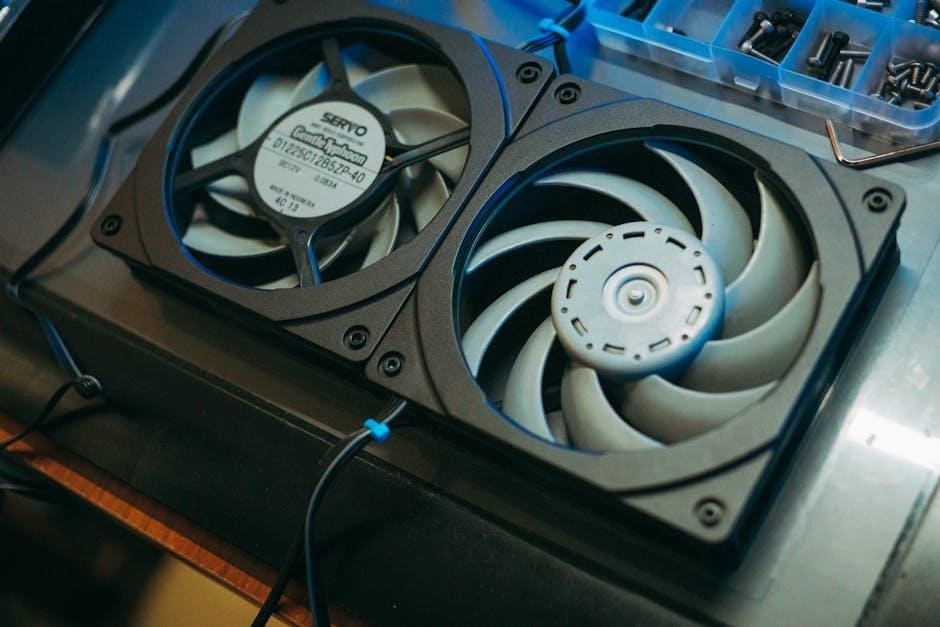
With all connections secure, carefully restore power to the ceiling fan at the circuit breaker. Observe the fan’s response, confirming it powers on and begins rotating smoothly.
Cycle through each speed setting to verify functionality, and test the light kit if applicable. Note any unusual noises or vibrations, as these indicate potential wiring or assembly issues requiring immediate attention.
Checking Fan Speed and Direction
Utilize the pull chains or remote control to cycle through the available fan speeds, ensuring each operates as expected. Confirm the fan direction switch functions correctly, allowing for both clockwise (cooling) and counter-clockwise (heating) airflow.
Proper direction is crucial for seasonal comfort; observe the airflow to verify it aligns with your desired setting. Address any inconsistencies immediately to optimize performance.
Troubleshooting Common Issues
If the fan fails to operate, first verify the power supply and wiring connections. For wobbling or excessive noise, ensure all blades are securely attached and balanced. Consult page 12 of the manual for detailed troubleshooting steps.
Address these issues promptly to maintain safe and efficient fan operation, preventing potential damage or hazards. A systematic approach will quickly resolve most problems.
Fan Not Turning On
If your Hunter ceiling fan isn’t starting, begin by checking the power source – ensure the circuit breaker hasn’t tripped. Carefully re-examine all wiring connections made during installation, referencing the wiring diagram. Verify the receiver (if applicable) is correctly installed.
Confirm the remote control has functional batteries and is paired correctly. A thorough check of these elements will often resolve the issue.
Wobbling or Noise
If experiencing fan wobble or unusual noises, first ensure all blade screws are tightened securely. Check that blades are properly attached to the blade irons and balanced – imbalances cause wobble. Verify the mounting bracket is firmly secured to the ceiling joist.
Avoid using lubricants on screws, as this can worsen the problem. A stable mount and balanced blades are crucial for quiet, smooth operation.
Remote Control Operation (if applicable)

For models with a remote, pairing is essential for functionality. Consult the remote’s specific instructions for the pairing process, typically involving power cycling the fan. Ensure the receiver is correctly connected during switch housing installation.
The remote controls fan speed, light operation, and potentially other features. Familiarize yourself with all remote functions for optimal control of your Hunter ceiling fan.
Pairing the Remote
Successful remote operation requires proper pairing to the fan’s receiver. Typically, this involves turning off power to the fan at the breaker, then restoring it. Within a short timeframe (usually seconds), press and hold the ‘pair’ or ‘sync’ button on the remote.
Observe for a confirmation signal – a light flash or fan response – indicating successful pairing. If unsuccessful, repeat the process, ensuring proximity to the fan during pairing.
Remote Functionality Overview
Your Hunter remote controls fan speed, light dimming (if applicable), and power. Dedicated buttons adjust speed through low, medium, and high settings. A separate button toggles the fan’s direction – forward for cooling, reverse for warmth.
Light controls manage brightness and on/off functionality. Some remotes feature timers or sleep modes for added convenience. Familiarize yourself with each button’s purpose for optimal control.
Light Kit Installation (if applicable)
Begin by carefully wiring the light kit according to the color-coded instructions, ensuring secure connections. Attach the light fixture to the mounting plate, tightening screws firmly but gently. Next, install the trim ring to conceal any gaps and provide a finished look.
Double-check all wiring before proceeding. Proper installation ensures safe and efficient illumination, enhancing the fan’s functionality and aesthetic appeal.
Wiring the Light Kit
Carefully connect the light kit wires, strictly adhering to the color-coded scheme – typically black to black, white to white, and ground to ground. Ensure wire nuts are securely fastened, preventing loose connections. Tuck the wires neatly into the switch housing, avoiding any pinching or strain.
Double-check all connections before proceeding to the next step, prioritizing electrical safety and proper functionality of the light fixture.
Attaching the Light Fixture
Gently raise the light fixture and align it with the mounting plate on the switch housing. Secure the fixture using the provided screws, ensuring they are tightened firmly but not over-tightened to avoid damage. Verify the fixture is stable and properly seated against the ceiling.
Proceed with caution, supporting the fixture’s weight during attachment to prevent strain on the wiring or mounting components.
Trim Ring Installation
Carefully slide the trim ring upwards along the downrod, concealing the mounting bracket and any exposed wiring. Ensure the trim ring sits flush against the ceiling, creating a clean and finished appearance. Gently rotate the ring if necessary to align any decorative features.
Secure the trim ring by tightening the set screws, if present, to prevent it from shifting or falling. Refer to page 8 for visual guidance.
Minimum Ceiling Height Requirements
Maintaining adequate clearance is crucial for safe fan operation. A minimum of 84 inches from the floor to the fan blades is generally recommended. Lower ceilings may require a flush-mount kit or a shorter downrod to ensure sufficient headroom.
Always prioritize safety and adhere to local building codes. Insufficient clearance can pose a hazard, so carefully assess your ceiling height before installation.
Lubrication Precautions
Avoid using any lubricant on the fan’s screws during assembly or maintenance. Applying oil or grease can compromise the secure tightening of components, potentially leading to instability.
Hunter fans are designed to function optimally without lubrication. Ensure all screws are firmly tightened according to the instructions to prevent wobbling or noise, maintaining a safe and reliable operation.
Weight Limit Considerations
It is crucial to verify that your ceiling joist can support the weight of the Hunter ceiling fan. Ensure the mounting location is capable of handling the fan’s total weight, including all components.
The fan must be securely mounted to prevent falling. A minimum of 84 inches of clearance from the floor to the fan blades is recommended for safe operation and compliance with safety standards.
Preventing Fan Fall & Ensuring Secure Mounting
Prioritize a secure installation to prevent the ceiling fan from falling. Perform steps A through D carefully, ensuring the mounting bracket is firmly attached to a ceiling joist capable of supporting the fan’s weight.
Do not use lubricant on screws as this can compromise the integrity of the mounting. Regularly inspect the mounting hardware for any signs of loosening or damage, maintaining fan safety.